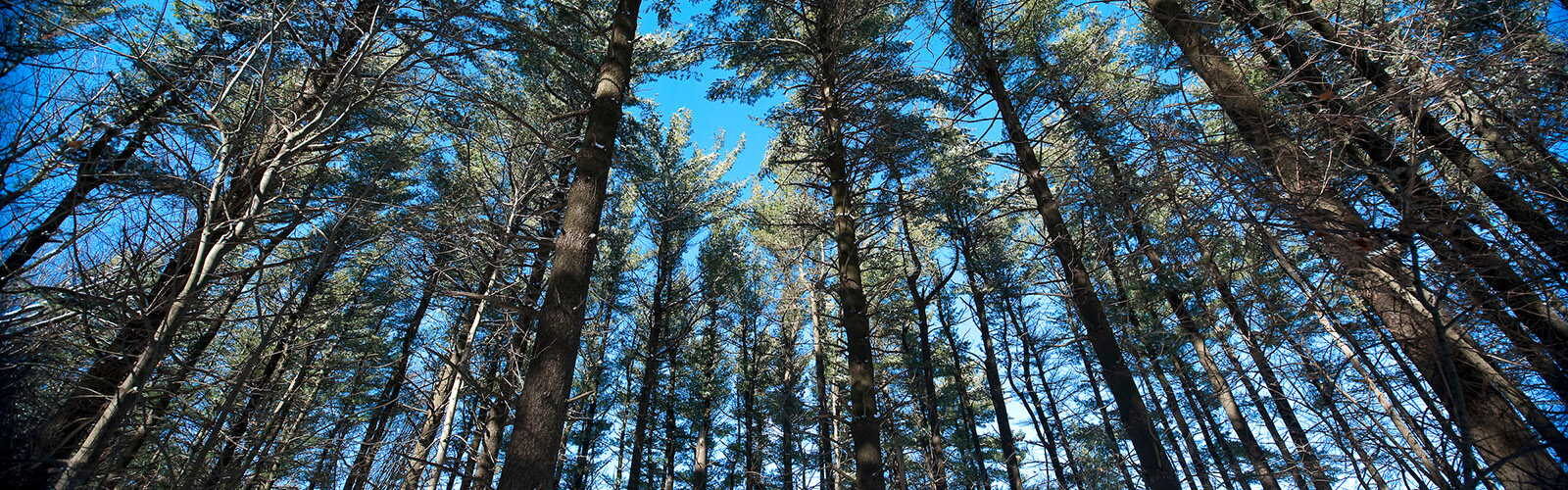
WICCI’s Forestry Working Group shares information across the forestry community about climate change impacts, adaptation, and mitigation. We also put information into action by helping foresters and land managers develop real-world actions to prepare for change and manage forest carbon.
Summary of Issues and Impacts
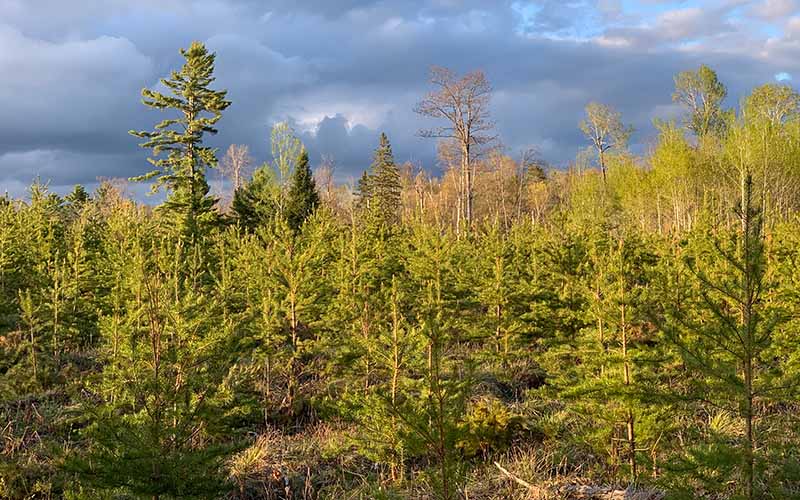
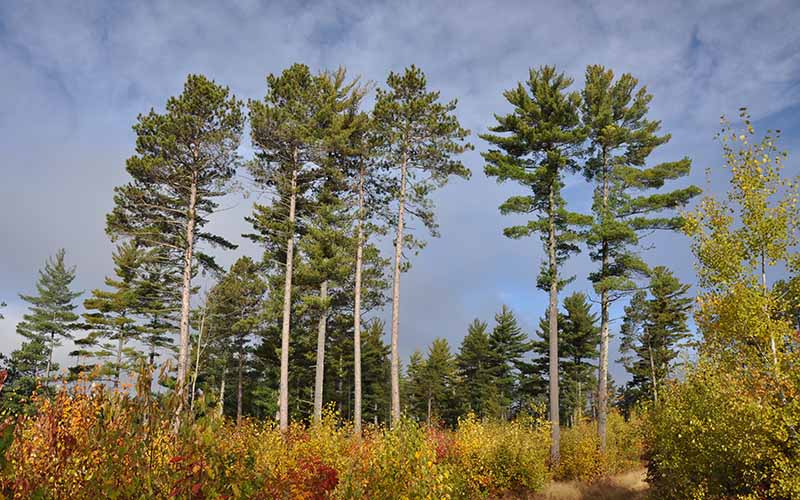
Wisconsin has 17 million acres of forests covering nearly half of the land area of the state, which provide a wide range of ecological, environmental, social, and economic benefits in both rural and urban areas. Forests also are valuable assets in the fight against climate change, as they absorb carbon dioxide that can be stored as carbon in soil and wood products. Climate change is bringing new challenges to the health and sustainability of our forests.
Examples of Primary Climate Impacts to Wisconsin Forests
Warmer winters are tipping the competitive balance between northern and southern species, providing more opportunity for non-native species, supporting larger deer populations, and making it more difficult to conduct forest management operations.
Larger deer populations are leading to more damage to young trees and understory plants, and deer may be preventing natural forest adaptation by consuming many of the species that are expected to do well in the future (oaks, maples, and pines).
Drought risk may increase for Wisconsin forests, due to a combination of warmer conditions, longer growing seasons, higher evaporation rates, and a larger share of precipitation coming as heavy rainfall.
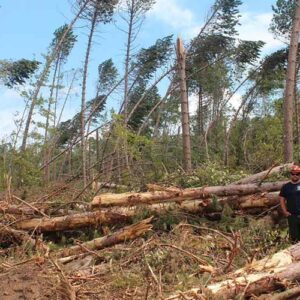
Heavy precipitation events are becoming more frequent, and these events cause substantial damage to riparian areas as well as forest roads, bridges, and other infrastructure.
Stressed forests may be more susceptible to damage from insect pests and diseases. Native pests and diseases can cause more damage, and new pests may be able to move into Wisconsin as the climate changes.
Explore
- Invasive species are likely to benefit from climate change in Wisconsin forests (pdf)
Recommended Solutions/Strategies
The Forestry Working Group’s past recommendations for forestry’s role in climate change adaptation and mitigation remain relevant today. Some of these recommendations were incorporated into the Governor’s Task Force on Climate Change 2020 report. Priority strategies include:
Keep Forests as Forests
To maintain existing forestland, land managers and communities will need to address declines in forest productivity and forest health, changes in the economics of forest management, and changes in forest ownership and owner objectives.
- Explore: To learn more about the threats to Wisconsin’s forests, read Wisconsin Forests at Risk: Engaging Wisconsinites in Another Century of Forest Conservation, a report by Wisconsin’s Green Fire.
Renew Forest Cover in Rural Areas
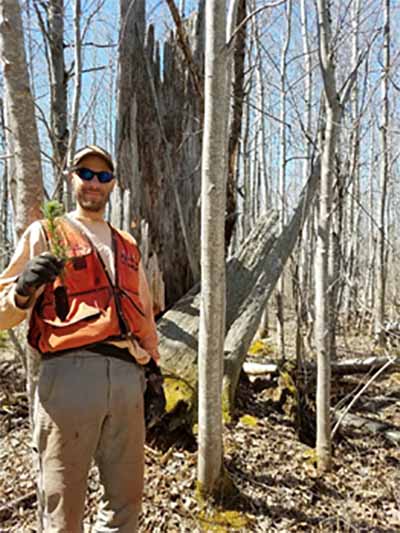
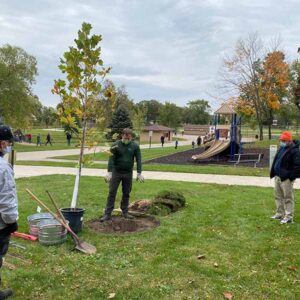
Reforestation, both by planting trees and by encouraging naturally occurring seedlings, is a powerful nature-based solution to climate change. Reforestation efforts should be tailored to local ecosystems, and new trees should be monitored to ensure survival.
- Explore: The State of Wisconsin has committed to plant 100 million trees and to conserve 125,000 acres of forestland between 2020 and 2030. By the end of 2024, the running total was 42.7 million trees planted.
Encourage Tree Planting and Retention in Urban Areas
Wisconsin’s census-defined urban areas include 584 square miles of woody vegetation, covering a third of the state’s urban land. Increasing attention to urban forests is a step toward ensuring that all Wisconsinites experience the full range of benefits that trees offer.
Pursue Climate-Focused Forest Management
Forests are a powerful way of both reducing atmospheric carbon and locking carbon into wood for long periods of time. Carbon markets continue to expand, enabling some landowners to monetize these important forest functions.
- Explore: Learn more about forest carbon, carbon markets, forest carbon accounting, and the forest carbon programs currently active in Wisconsin (all documents are pdfs)
- Example: As of September 2024, 11 out of Wisconsin’s 30 county forests have entered the voluntary forest carbon market with enrolled land totaling over 1.2 million acres. This represents almost half of all the county forest acreage in the state.

Support Wisconsin Wood Product Utilization
Between 2019 and 2023, the overall number of businesses in Wisconsin that utilize wood decreased by 5.4 percent and the number of forestry and logging businesses decreased by 8 percent. However, Wisconsin’s forest products industry remains one of Wisconsin’s leading manufacturing sectors, contributing $42 billion to the state’s economy.
- Example: A grocery store in Madison has columns made from ash trees and ceiling beams made from red pine trees, storing about 100 tons of carbon. By replacing steel, the structure prevented an additional 260 tons of carbon from being emitted.
Update Forest Plans at the Federal, State, County, Tribal, and Private Lands Levels to Address Climate Risks with Site-Specific Strategies
Weaving together both Traditional and Scientific Ecological Knowledge will help land stewards prepare for upcoming changes.
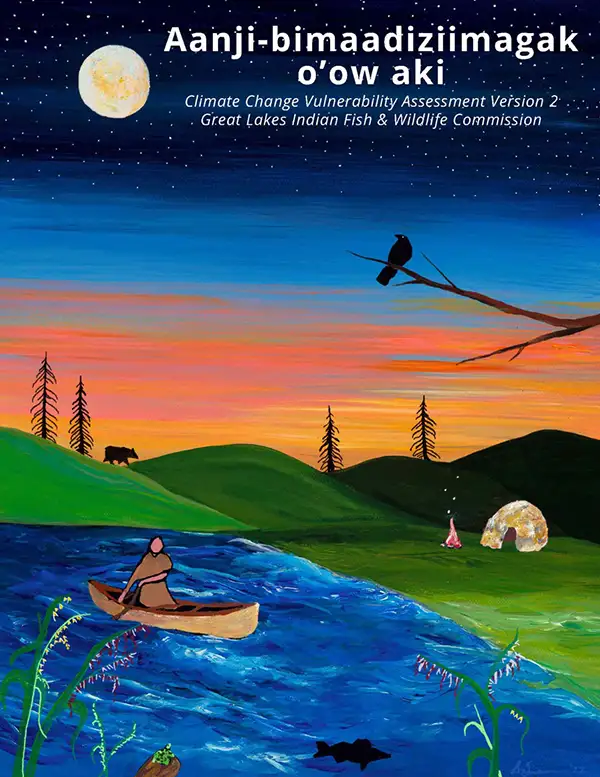
- Explore: Aanji bimaadiziimagak o’ow aki, the second version of the Climate Change Vulnerability Assessment from the Great Lakes Indian Fish and Wildlife Commission (GLIFWC).
Support a Holistic Deer Management Program
This approach recognizes the impacts of deer on forest productivity and results in these impacts being reflected in deer population goals.
- Explore: Two-page bulletin on forests and white-tailed deer (pdf)
Invest in Adaptive Logging Practices and Logging Equipment
This approach helps address or minimize limitations and impacts resulting from shorter winters and more wet conditions.
- Resource: Learn more about Climate Change Considerations for Forest Operations in Northern Forests.
Increase Emphasis on Forest Restoration and Assisted Migration of Forest Species
In light of climate change impacts increase forest restoration and assisted migration of forest species through applied field studies and by increased nursery capacity.
- Explore: Two-page bulletin on assisted migration (pdf)
Environmental Climate Justice Issues
Forests are important to all Wisconsin residents, as providers of ecological, economic, recreational, cultural, and health benefits. However, access to those benefits can vary in important ways, causing both environmental and climate injustices. The Forestry Working Group has outlined important ways that climate change impacts to forests might affect environmental and climate justice:
Helping forests adapt to climate change can help ensure that treaty rights are maintained for Wisconsin’s tribal communities.Many tribes in Wisconsin own forest land, and tribes also retain their traditional rights for hunting and gathering across large, ceded territories in Wisconsin.
Climate change is affecting culturally significant plants and animals on which Indigenous people rely for spiritual, ceremonial, medicinal, subsistence, and economic needs. Some iconic beings, such as paper birch, may become less abundant or less healthy within reservation or Ceded Territory boundaries.
Equitable distribution of tree canopy is increasingly recognized as an important factor in urban tree-planting decisions. Urban forests can help cities cope with climate change by reducing the impacts of extreme heat and precipitation events, while improving human health and well-being.
Urban forests can be particularly vulnerable to climate change, however, and underserved populations tend to have lower tree canopy cover.
Resources
This is an accordion element with a series of buttons that open and close related content panels.
Bulletins for Forest Managers and Landowners
- Bulletin 1 – The 2021 WICCI Assessment (pdf)
- Bulletin 2 – Forests and White-Tailed Deer (pdf)
- Bulletin 3 – Assisted Migration (pdf)
- Bulletin 4 – Invasive Species (pdf)
- Bulletin 5 – Fire and Carbon (pdf)
- Bulletin 6 – Prescribed Fire (pdf)
- Bulletin 7 – Forest Carbon Overview (pdf)
- Bulletin 8 – Forest Carbon Markets (pdf)
- Bulletin 9 – Forest Carbon Accounting (pdf)
- Bulletin 10 – WI Forest Carbon Programs (pdf)
Documents and Handouts
Aanji bimaadiziimagak o’ow aki: GLIFWC Climate Change Vulnerability Assessment Version 2
Adaptation Project Summary: BCPL Oak-Pine Management at Woodboro Lakes (pdf)
Climate Change Adaptation Demonstration: Chequamegon-Nicolet National Forest (pdf)
Climate Change Field Guide for Northern Wisconsin Forests: Site-Level Considerations and Adaptation
Climate Change Field Guide for Southern Wisconsin Forests: Site-Level Considerations and Adaptation
Climate Change Vulnerability Assessment for Northern Wisconsin Forests
Climate Wisconsin 2050: Forestry (pdf)
Private Landowner Climate Scorecard and Actions (pdf)
Tree species handouts (northern, southern, and Driftless areas of Wisconsin)
Videos
Websites
Our Team
Stakeholders and Partners
- Private landowner groups
- Agency forest managers (state, counties, tribes, and federal)
- Private industry (groups like SFI and FISTA, consulting foresters, industrial landowners, mill owners, and loggers)
- Land trusts and other NGOs
- Academic community
Members
- Dan Buckler (co-chair), Urban Forester, Wisconsin Department of Natural Resources, daniel.buckler@wisconsin.gov
- Brad Hutnik (co-chair), Forest Ecologist and Silviculturist, Wisconsin Department of Natural Resources, bradley.hutnik@wisconsin.gov
- Matt Dallman, Northwoods Strategy Director, The Nature Conservancy
- Johanna Desprez, Regional Natural Resources Educator, UW-Madison Division of Extension
- Ron Eckstein, Wisconsin Chapter of The Wildlife Society
- Forrest Gibeault, Senior Director, Portfolio Management, Aurora Sustainable Lands
- Stephen Handler, Climate Change Adaptation Specialist, U.S. Forest Service and Northern Institute of Applied Climate Science, stephen.handler@usda.gov
- Scott Hershberger, Forestry Communications Specialist, UW–Madison Division of Extension
- Jason Holmes, Inventory and Analysis Forester, Bayfield County
- Scott O’Donnell, Forest Geneticist, Wisconsin Department of Natural Resources
- Linda Parker, Wisconsin’s Green Fire
- Keith Phelps, Working Lands Forestry Educator, UW–Madison Division of Extension
- Doug Sippl, Chequamegon-Nicolet National Forest
- Jim Swanke, Lecturer, UW-Madison
- Travis Swanson, Forest Ecologist, Great Lakes Indian Fish and Wildlife Commission